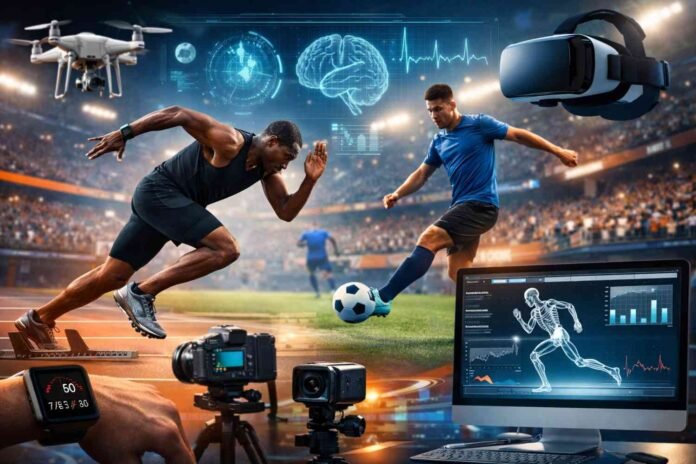
Competitive sports have always been shaped by innovation—from improved footwear to advanced training methods. Today, however, technology is not just enhancing athletic performance; it is fundamentally redefining how sports are played, coached, analyzed, and experienced. From data-driven strategies to immersive fan engagement, the digital age is transforming competition at every level.
This article explores how technology is revolutionizing competitive sports, reshaping the future of athletics while raising new questions about fairness, access, and the human element of the game.
Data Analytics: Turning Performance into Precision
Modern competitive sports thrive on data. Wearable sensors, GPS trackers, and smart equipment collect vast amounts of information on speed, endurance, biomechanics, and recovery.
How analytics change the game:
- Coaches identify performance patterns and optimize training loads.
- Athletes reduce injury risk through fatigue monitoring.
- Teams develop data-backed strategies tailored to opponents.
Instead of relying solely on intuition, sports professionals now make decisions grounded in measurable performance insights—often gaining the critical edge that separates champions from contenders.
Wearable Technology: The Athlete’s Digital Partner
In competitive sports, wearable technology has become a vital instrument. Devices embedded in clothing, shoes, or wristbands track heart rate variability, muscle exertion, hydration levels, and sleep quality.
These insights allow athletes to:
- Fine-tune training intensity
- Improve recovery cycles
- Extend career longevity
By listening to their bodies through technology, athletes are training smarter—not just harder.
Artificial Intelligence and Smart Coaching
Artificial intelligence is revolutionizing coaching and game preparation. Thousands of hours of gaming footage may be analyzed by AI-powered software, which can also quickly mimic game scenarios and identify tactical trends.
AI applications in competitive sports:
- Opponent behavior prediction
- Automated performance breakdowns
- Real-time tactical recommendations
This shift enables coaches to focus more on leadership and motivation while letting intelligent systems handle complex analysis.
Video Technology and Fair Play
Few technological advances have sparked as much debate—and improvement—as video-assisted officiating. Tools such as goal-line technology and instant replay systems have significantly reduced human error in critical moments.
While not without controversy, these systems:
- Improve decision accuracy
- Increase transparency
- Protect the integrity of competition.
The result is a fairer playing field where outcomes are determined more by performance than by officiating mistakes.
Sports Science and Injury Prevention
Technology has dramatically advanced sports medicine. Motion-capture systems, 3D biomechanics analysis, and AI-based injury prediction models help teams prevent injuries before they happen.
Benefits include:
- Earlier detection of overuse injuries
- Personalized rehabilitation programs
- Faster, safer return-to-play decisions
For competitive athletes, staying healthy is often the biggest competitive advantage of all.
Fan Engagement in the Digital Era
Technology isn’t just transforming athletes—it’s reshaping how fans experience competitive sports. Virtual reality, augmented reality, and real-time data overlays are creating more immersive viewing experiences.
Fans can now:
- View games from multiple angles.
- Access live player stats instantly
- Engage with athletes through digital platforms.
This deeper connection is expanding sports audiences globally and redefining what it means to be a fan.
Ethical Challenges and the Future of Competition
As technology develops further, significant ethical issues are also brought up:
- Where is the line between enhancement and unfair advantage?
- Will access to advanced technology widen the gap between elite and developing athletes?
- How do we preserve the human spirit of competition?
Overcoming these obstacles will be as crucial as creating the next ground-breaking invention.
The Future of Competitive Sports
Technology is no longer a supporting tool—it is a driving force behind modern competition. As innovations continue to emerge, the most successful athletes and teams will be those who adapt, integrate, and balance technology with skill, discipline, and creativity.
How technology is revolutionizing competitive sports is not just a story of machines and data—it’s a story of human potential amplified by innovation.