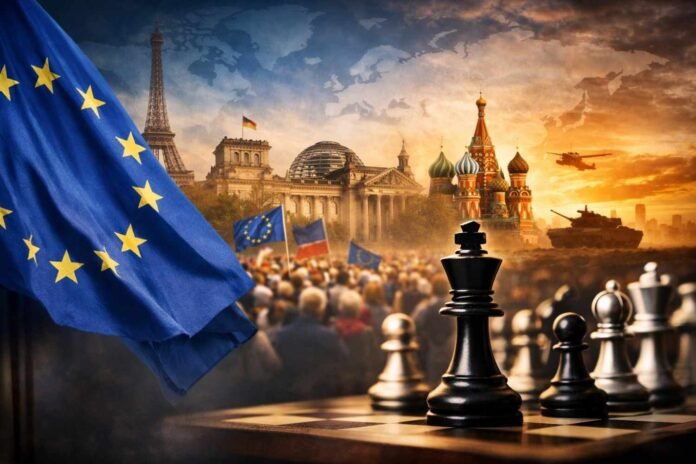
Europe is standing at a crossroads unlike any it has faced in recent decades. The continent that once defined global norms in democracy, diplomacy, and social progress now finds itself navigating overlapping crises—political fragmentation, economic uncertainty, demographic change, and shifting global power dynamics. Together, these forces are reshaping Europe’s identity and future.
This is not merely a moment of turbulence. It is a turning point.
Understanding where Europe is headed requires looking beyond headlines and election results. It demands a closer look at the evolving relationship between politics, people, and power—and how tensions among them are redefining the European project itself.
The Political Landscape: Fragmentation Over Unity
For much of the post-war era, Europe moved steadily toward integration. The European Union symbolized cooperation over conflict, shared prosperity over nationalism. That momentum has slowed.
Across the continent, traditional political parties are losing ground. In their place, new movements—often nationalist, populist, or Eurosceptic—are gaining influence. These parties thrive on public frustration with bureaucracy, economic inequality, and perceived loss of sovereignty.
Decisive policymaking has become more difficult as coalition administrations have become the rule rather than the exception. Even within the EU, member states increasingly prioritize domestic interests over collective solutions. Disagreements on migration, fiscal policy, climate commitments, and foreign relations reveal deep ideological divides.
Europe’s political challenge is no longer about choosing left or right. It is about reconciling integration with independence, and consensus with accountability.
The People: A Continent Restless and Divided
Politics does not shift in isolation. It reflects the mood of the people, and Europe’s population is restless.
Rising living costs, housing shortages, and job insecurity have eroded trust in institutions. Younger generations, in particular, feel disconnected from political systems that seem slow to respond to modern realities—many question whether democracy, as currently practiced, can deliver fairness in a globalized economy.
At the same time, Europe is aging. Fewer workers are supporting more retirees, placing a strain on welfare systems. Migration could ease this pressure, yet it remains one of the most polarizing issues across the continent.
Cultural identity has become a fault line. For some, diversity represents renewal and strength. For others, it feels like displacement. These opposing views fuel emotional debates that go far beyond policy, shaping how Europeans see themselves—and each other.
Power Shifts: Europe in a Changing World Order
While Europe debates its internal future, the external world is changing rapidly.
The continent no longer sits at the center of global power. The rise of China, renewed assertiveness from Russia, and a more unpredictable United States have forced Europe to rethink its strategic role. Economic power is increasingly tied to technology, energy security, and supply chains—areas where Europe must compete rather than lead by default.
Defense and security, once comfortably outsourced, are back on the agenda. Calls for “strategic autonomy” reflect a growing awareness that Europe must be able to protect its interests without relying entirely on allies.
Yet power is not only military or economic. Europe still wields significant influence through regulation, diplomacy, and soft power. The challenge lies in using these tools cohesively, rather than as fragmented national efforts.
Democracy Under Pressure, Not Defeat
One of the most common narratives suggests that European democracy is in decline. The reality is more complex.
Democratic institutions are under strain, but they are also being tested—and tests can lead to renewal. High voter turnout in recent elections across several countries shows that citizens still care deeply about political outcomes. Protests, civic movements, and public debates signal engagement, not apathy.
The real risk is not collapse, but stagnation: systems that formally function yet fail to adapt. If European democracies can modernize governance, improve transparency, and deliver tangible results, trust can be rebuilt.
This turning point is an opportunity to reimagine democracy for the 21st century—more participatory, more responsive, and more resilient.
What Comes Next for Europe?
A single election, treaty, or crisis will not decide Europe’s future. It will emerge from countless choices made by governments, institutions, and citizens over the coming years.
Key questions remain open:
- Can Europe balance national identity with collective responsibility?
- Will political leadership rise to meet public frustration with meaningful reform?
- Can the continent assert itself globally without abandoning its core values?
The answers will define Europe’s place in the world—and the daily lives of its people.
Conclusion: A Defining Moment
Europe at a turning point: politics, people, and power is more than a phrase—it captures a defining historical moment. The forces reshaping the continent are complex, interconnected, and deeply human.
Europe has reinvented itself before, often in response to a crisis. Whether it can do so again will depend on its willingness to confront uncomfortable truths, bridge divides, and imagine a future that feels inclusive, credible, and strong.
The direction Europe chooses now will echo far beyond its borders—and far into the future.