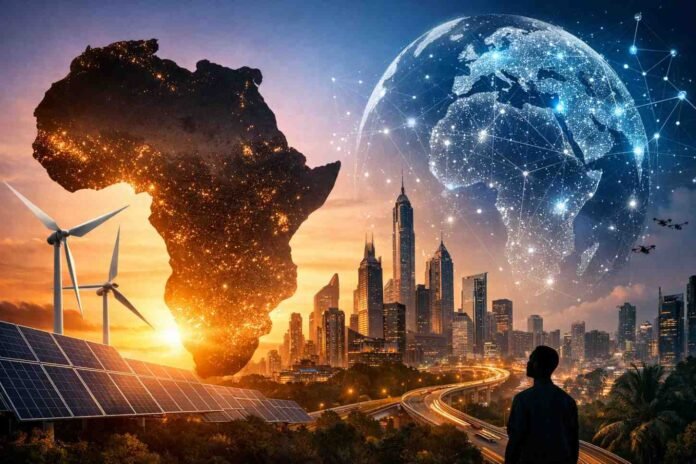
For decades, conversations about Africa were framed through the lens of potential rather than progress. Today, that narrative is changing—quickly and decisively. From technology hubs and green energy leadership to cultural influence and economic transformation, Africa is no longer just the continent of tomorrow; it is shaping the global future right now.
The phrase “Africa Rising” is not a slogan anymore. It is a measurable reality driven by demographics, innovation, resilience, and an unmistakable shift in global power dynamics.
A Demographic Advantage the World Cannot Ignore
Africa is the youngest continent on Earth. By 2050, more than one in four people globally will be African, and over 60% of the population will be under the age of 25. This youth bulge is not a liability—it is Africa’s greatest strategic asset.
Young Africans are:
- Digitally native
- Entrepreneurially driven
- Globally connected
- Increasingly educated
While aging populations strain economies in Europe and East Asia, Africa is building the world’s largest future workforce. Countries that invest in African talent today are investing in the global economy of the next half-century.
Technology and Innovation: Africa’s Quiet Revolution
Contrary to outdated assumptions, Africa is not lagging in innovation—it is leapfrogging.
Fintech Leading the Way
Africa makes up a sizable portion of the global mobile money market. Services like mobile banking, digital payments, and blockchain-based solutions were adopted out of necessity, but they have evolved into globally admired financial systems.
African fintech startups are solving problems many developed economies still struggle with:
- Financial inclusion
- Cross-border payments
- Informal economy integration
Tech Hubs on the Rise
Cities like Lagos, Nairobi, Cape Town, Kigali, and Accra are becoming recognized innovation ecosystems. These hubs are producing scalable startups in:
- Artificial intelligence
- Agritech
- Health tech
- Climate technology
The next global unicorn is just as likely to come from Africa as from Silicon Valley.
Economic Growth Beyond Natural Resources
Africa’s growth story is no longer tied exclusively to oil, gas, or minerals. While natural resources remain important, the continent is diversifying fast.
Key growth sectors include:
- Manufacturing
- Renewable energy
- Creative industries
- Digital services
- Agribusiness
The African Continental Free Trade Area (AfCFTA)—the largest free trade zone in the world by number of countries—has the potential to unlock trillions of dollars in intra-African trade and reduce dependency on external markets.
Africa and the Global Energy Transition
As the world races toward sustainability, Africa holds a unique position.
The continent possesses:
- Vast solar potential
- Significant wind corridors
- Critical minerals for electric vehicles and batteries
Unlike industrialized nations burdened by legacy infrastructure, African countries have the opportunity to build green-first economies. This positions Africa not as a follower in the energy transition, but as a leader shaping its direction.
Cultural Power: Africa’s Global Influence
Africa’s influence is not only economic—it is cultural.
African music, fashion, film, and art are shaping global trends. Afrobeats dominates international charts. African designers headline global fashion weeks. Nollywood produces more films annually than Hollywood.
This cultural rise matters because soft power drives perception, investment, and influence. The world is not just consuming African culture—it is being inspired by it.
Redefining the Global Narrative
The most profound shift is psychological.
Africans are increasingly telling their own stories—through media, startups, research, and policy. The continent is moving away from externally imposed narratives toward self-defined progress.
Challenges remain, of course:
- Infrastructure gaps
- Governance issues in some regions
- Climate vulnerability
But rising continents are not defined by the absence of challenges—they are determined by how they confront them.
Why Africa’s Rise Matters to the World
Africa’s trajectory will shape:
- Global labor markets
- Innovation ecosystems
- Climate outcomes
- Economic growth patterns
- Cultural movements
Ignoring Africa’s rise is not just shortsighted—it is strategically reckless.
The future will not be shaped in one hemisphere alone. It will be co-created, and Africa will be at the center of that creation.
Conclusion: Africa Is Not Catching Up—It’s Moving Forward
“Africa Rising” is no longer a hopeful phrase whispered in policy rooms. It is visible in startups securing global funding, artists filling international arenas, young leaders redefining governance, and economies integrating at scale.
Africa is not asking for a seat at the table.
It is building a new table altogether.
And the world is beginning to take notice.