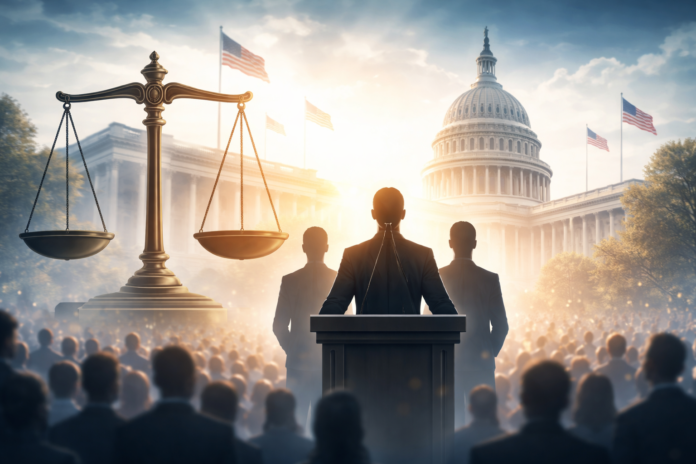
Democracy is often described as “rule by the people,” yet in modern politics, the relationship between democracy, power, and leadership is far more complex than that phrase suggests. Across the world, elected leaders, institutions, corporations, media, and citizens engage in a continuous struggle to define who governs, how decisions are made, and whose interests are ultimately served.
Understanding democracy, power, and leadership in modern politics requires moving beyond slogans and examining how authority actually functions in contemporary societies. This article explores how power is acquired, exercised, challenged, and reshaped—and what that means for the future of democratic leadership.
The Evolution of Democracy in the Modern Political Era
Modern democracy did not emerge fully formed. It evolved through revolutions, reforms, and social movements that challenged monarchies, empires, and authoritarian rule. While the core democratic principles—popular sovereignty, political equality, and accountability—remain central, their application has changed significantly.
Today’s democracies operate in environments shaped by:
- Globalization and interconnected economies
- Rapid technological advancement
- Expanding bureaucratic states
- Polarized political cultures
These forces have altered how power flows within democratic systems, often blurring the line between elected authority and informal influence.
Power in Modern Politics: Beyond Elected Office
In theory, democratic power flows upward from citizens to leaders through elections. In practice, power in modern politics is distributed across multiple layers.
Institutional Power
Legislatures, courts, regulatory agencies, and international organizations wield significant authority. Even strong political leaders are constrained—or enabled—by these institutions.
Economic and Corporate Power
Corporations, financial markets, and wealthy individuals influence policy through lobbying, campaign financing, and control over resources. In many democracies, economic power quietly rivals electoral power.
Media and Information Power
Traditional media, social platforms, and algorithm-driven content shape public opinion and political narratives. The ability to frame issues can be as influential as the ability to pass laws.
Cultural and Social Power
Public norms, identity politics, and social movements increasingly shape political agendas. Grassroots activism can elevate issues that institutions once ignored.
Together, these forces demonstrate that power in modern democracies is diffuse, contested, and often opaque.
Leadership in Democratic Systems: Authority Without Absolutism
Leadership in a democracy is fundamentally different from leadership in authoritarian systems. Democratic leaders must persuade rather than command, negotiate rather than dictate, and remain accountable to voters.
Effective democratic leadership requires:
- Legitimacy, earned through fair elections and public trust
- Competence, demonstrated through policy outcomes.
- Moral authority, grounded in shared values and ethical conduct
However, modern political leaders face unprecedented challenges. Governing has become more complex, expectations are higher, and patience among voters is thinner. As a result, leaders often struggle to balance long-term policy goals with short-term political survival.
The Tension Between Popular Will and Elite Influence
One of the defining features of democracy, power, and leadership in modern politics is the tension between mass participation and elite control.
While citizens vote, protest, and engage online, political elites often dominate:
- Policy design
- Agenda setting
- Access to decision-makers
This gap fuels public frustration and declining trust in democratic institutions. Populist movements—both left and right—have emerged largely in response to the perception that democracy serves elites more than ordinary people.
Yet populism itself poses risks, especially when leaders claim to embody “the will of the people” while undermining democratic norms and institutions.
Technology’s Disruptive Role in Democratic Leadership
Digital technology has reshaped political power more rapidly than any development in recent history.
Positive Impacts
- Greater access to information
- Faster political mobilization
- Direct communication between leaders and citizens
Negative Consequences
- Misinformation and disinformation
- Political polarization
- Manipulation of public opinion through data analytics
Modern political leaders must now govern in a permanent information battlefield, where authority can be challenged instantly, and credibility can collapse overnight.
Accountability and the Crisis of Democratic Trust
Accountability is the cornerstone of democratic leadership. When leaders misuse power or appear disconnected from public concerns, trust erodes.
Indicators of this crisis include:
- Declining voter turnout
- Skepticism toward political institutions
- Growing belief that “politics doesn’t change anything.”
Restoring trust requires more than procedural reforms. It demands transparent leadership, meaningful participation, and policies that visibly improve people’s lives.
The Future of Democracy, Power, and Leadership
The future of modern democracy will not depend on a single leader or ideology. It will depend on how societies manage the balance between authority and accountability, efficiency and inclusion, power and legitimacy.
Key questions remain:
- Can democratic institutions adapt to rapid global change?
- Will leaders prioritize long-term public good over short-term power?
- Can citizens reclaim meaningful influence beyond elections?
The answers will shape not only who leads, but how power itself is defined in the decades to come.
Conclusion: Rethinking Power in Democratic Leadership
Democracy, power, and leadership in modern politics are deeply intertwined—and increasingly contested. While democracy promises popular control, power often operates through hidden channels, and leadership requires navigating constant pressure from institutions, elites, and the public.
Anyone hoping to interact critically and ethically with politics must comprehend these forces. Democracy is not a finished system; it is an ongoing process that depends on informed citizens, accountable leaders, and a shared commitment to political integrity.
In modern politics, the true measure of leadership is not how much power one holds—but how responsibly that power is used.