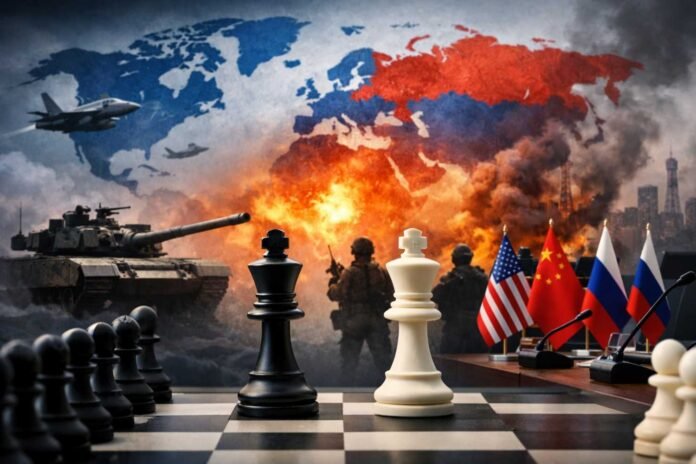
International relations are no longer shaped solely by diplomacy, trade agreements, or traditional alliances. In today’s world, political conflicts are fundamentally reshaping how nations interact, cooperate, and compete. From regional power struggles to ideological confrontations with global consequences, these conflicts are redefining political norms, security frameworks, and economic systems across continents.
Unlike the Cold War era, modern geopolitical conflicts are multidimensional. They combine military tensions with cyber warfare, energy politics, economic sanctions, and information battles. Understanding these political conflicts is essential to understanding the future of global order.
This article explores the most influential political conflicts redefining international relations today, why they matter, and how they are changing the balance of power worldwide.
The Shift from Unipolar to Multipolar Power Dynamics
For decades after the Cold War, international relations were largely dominated by a unipolar system led by the United States. That structure is now eroding. Political conflicts are accelerating the transition toward a multipolar world, where power is distributed among multiple regional and global actors.
Rising powers such as China, regional influencers like Iran and Turkey, and coalitions such as BRICS are challenging established Western-led institutions. Conflicts are no longer isolated regional issues; they have global ripple effects that influence trade routes, defense strategies, and diplomatic alliances.
This shift has made international relations more fluid—and more unstable.
The Russia–Ukraine War and the Rewriting of Global Security
Few political conflicts have had a more profound impact on international relations in recent years than the Russia–Ukraine war. What began as a regional conflict has evolved into a defining geopolitical confrontation.
Why It Matters Globally
- NATO has expanded and reasserted its relevance
- Europe has reassessed its energy dependence.
- Sanctions have reshaped global financial systems.
- Military alliances have hardened along ideological lines.
The conflict has reintroduced large-scale conventional warfare to Europe and forced nations worldwide to reconsider defense spending, sovereignty, and deterrence strategies.
This war has also blurred the line between regional conflict and global power struggle, fundamentally redefining security relationships between East and West.
US–China Strategic Rivalry: The New Axis of Global Tension
The growing rivalry between the United States and China is arguably the most important political conflict shaping international relations today—even without direct military confrontation.
Key Areas of Conflict
- Trade and technology restrictions
- Taiwan and regional security in the Indo-Pacific
- Cybersecurity and espionage
- Competing global development models
Unlike traditional wars, this conflict is being fought through economic pressure, technological dominance, and influence over international institutions. Countries around the world are increasingly forced to navigate a delicate balance, avoiding alignment with one side at the expense of the other.
This rivalry is redefining diplomacy itself, shifting international relations from cooperation to strategic competition.
The Middle East: Political Conflicts with Global Consequences
Political conflicts in the Middle East continue to play an outsized role in shaping international relations due to the region’s strategic location, energy resources, and ideological significance.
Ongoing Impact
- Iran’s regional influence affects global security.
- Israel–Palestine tensions influence diplomatic alliances.
- Proxy conflicts reshape power balances.
- Energy politics influence global markets.
What makes Middle Eastern political conflicts unique is their ability to draw in global powers, often indirectly. These conflicts have transformed international relations into a complex web of alliances, rivalries, and negotiated coexistence.
The Rise of Proxy Wars and Hybrid Conflict
Modern political conflicts rarely involve direct declarations of war between major powers. Instead, international relations are being reshaped by proxy wars and hybrid conflicts.
These include:
- Cyberattacks on infrastructure
- Disinformation campaigns
- Economic coercion
- Support for non-state actors
This form of conflict allows states to exert influence while avoiding direct military confrontation. As a result, international relations have become more ambiguous, where hostility exists without formal war, and alliances operate in gray zones.
Economic Sanctions as a Tool of Political Conflict
Economic sanctions have emerged as one of the most powerful instruments in modern political conflicts. Once considered a secondary tool, sanctions now sit at the center of international relations strategy.
Sanctions affect:
- Global supply chains
- Currency stability
- Energy markets
- International banking systems
As sanctions become more widespread, countries are seeking alternatives to traditional financial systems, reducing dependence on dominant currencies and institutions. This is quietly but fundamentally reshaping the architecture of global economic relations.
Regional Conflicts with Global Reach
Political conflicts in regions such as Africa, South Asia, and Eastern Europe are no longer confined by geography. Civil wars, territorial disputes, and governance crises increasingly have international consequences.
These conflicts contribute to:
- Refugee movements
- Global security threats
- Humanitarian interventions
- Shifts in diplomatic engagement
International relations today must respond not only to state actors but also to instability that crosses borders and challenges existing global frameworks.
How Political Conflicts Are Changing Diplomacy
Traditional diplomacy was built on negotiation, treaties, and long-term engagement. Political conflicts today demand faster responses, crisis management, and strategic signaling.
Key changes include:
- Increased use of multilateral forums
- Strategic ambiguity replacing clear alliances
- Greater role of public opinion and media
- Diplomacy conducted alongside economic and cyber pressure
As political conflicts grow more complex, international relations are becoming less predictable and more transactional.
The Future of International Relations in a Conflict-Driven World
Political conflicts are no longer interruptions to international relations—they are shaping their very foundation. The world is moving toward an era defined by competition, uncertainty, and shifting power centers.
Future international relations will likely feature:
- Flexible alliances rather than fixed blocs
- Greater regional autonomy
- Increased importance of economic and technological power
- Ongoing tension between cooperation and confrontation
Understanding these political conflicts is essential for governments, businesses, and global citizens alike.
Final Thoughts
The political conflicts redefining international relations today are not isolated events. They are interconnected forces reshaping diplomacy, security, economics, and global governance. As power becomes more distributed and conflicts more complex, international relations will continue to evolve in ways that challenge traditional assumptions.
Those who understand these dynamics will be better prepared to navigate an increasingly uncertain global landscape.