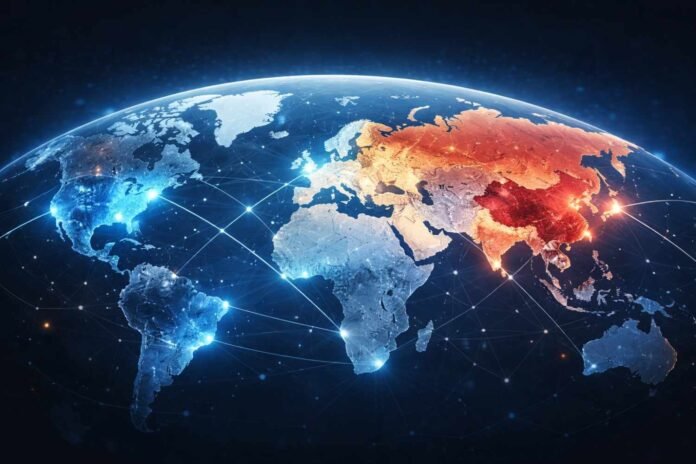
The global balance of power is no longer defined by military strength alone. In today’s world order, influence comes from a complex mix of economic power, technological leadership, diplomatic reach, cultural impact, and the ability to shape global rules. Some countries dominate headlines through force, others through innovation, finance, or soft power—but together they shape how the world works.
This article explores the most influential countries in today’s world order, examining why they matter, how they exert influence, and what their roles mean for the future of global politics.
What Defines Influence in the Modern World Order?
Before ranking influential nations, it’s essential to understand what “influence” really means in the 21st century. Today, global power rests on several interconnected pillars:
- Economic scale and financial reach
- Military capability and strategic alliances
- Technological and scientific leadership
- Diplomatic leverage and institutional power
- Cultural and ideological appeal
- Control over global supply chains and resources
No single country dominates all of these areas—but a few come remarkably close.
United States: The World’s Most Comprehensive Power
The United States remains the most influential country in today’s world order, largely because of its unmatched combination of strengths.
Why the U.S. Leads
- The world’s largest economy by nominal GDP
- The strongest military with global deployment capabilities
- Control over key global institutions (IMF, World Bank, NATO)
- The U.S. dollar is the world’s primary reserve currency
- Leadership in technology, higher education, and innovation
American influence extends far beyond borders through multinational corporations, media, universities, and cultural exports. Even nations that challenge U.S. policies often operate within systems originally shaped by American leadership.
Despite internal political divisions and growing global competition, the United States continues to set the tone for international finance, security, and innovation.
China: The Strategic Challenger Reshaping Global Power
China is the most significant rising force in the current world order and the only country capable of challenging U.S. dominance across multiple domains.
China’s Growing Influence
- The world’s second-largest economy
- Central role in global manufacturing and trade
- Expanding technological capacity in AI, 5G, and renewable energy
- Massive infrastructure diplomacy through the Belt and Road Initiative
- Increasing military presence in the Indo-Pacific
China’s influence is especially strong in Asia, Africa, and parts of Latin America, where it offers investment, infrastructure, and trade partnerships without political conditions.
While China’s model differs sharply from Western democracies, its ability to reshape global supply chains and economic norms makes it one of the most influential countries in today’s world order.
Russia: Strategic Power Beyond Economic Size
Russia’s influence far exceeds what its economic size alone would suggest. It remains a decisive force due to strategic, military, and geopolitical leverage.
Sources of Russian Influence
- One of the world’s largest nuclear arsenals
- Permanent seat on the UN Security Council
- Major global energy exporter
- Strong influence in Eastern Europe, Central Asia, and the Middle East
Russia often exerts power asymmetrically—through diplomacy, energy politics, cyber capabilities, and regional interventions. While sanctions and economic constraints have limited its growth, Russia continues to shape global security debates and regional power balances.
European Union (Led by Germany and France): Regulatory and Economic Power
Although not a single country, the European Union—driven largely by Germany and France—functions as a major global influencer.
Why the EU Matters
- One of the world’s largest combined economies
- Global standard-setter in data privacy, trade, and environmental policy
- Strong diplomatic and humanitarian presence
- Significant cultural and soft power reach
Germany anchors Europe economically, while France contributes diplomatic and military leadership. Together, they allow the EU to influence global rules, even without unified military power.
In many ways, the EU shapes how the world does business rather than dominating it through force.
India: The Emerging Power of the 21st Century
India’s influence is expanding rapidly, driven by demographics, economic growth, and geopolitical positioning.
India’s Strategic Advantages
- The world’s most populous country
- Fast-growing economy and technology sector
- Increasing role in global supply chains
- Key player in Indo-Pacific security
- Strong diplomatic ties with both Western and non-Western powers
India’s ability to maintain strategic autonomy—engaging with the U.S., Europe, Russia, and the Global South—makes it uniquely influential. While challenges remain, India is increasingly seen as a future pillar of the global order.
United Kingdom: Global Influence Through Networks
Despite no longer being a superpower, the UK retains significant global influence through institutions, finance, and diplomacy.
The UK’s Enduring Power
- London as a global financial hub
- Strong intelligence and military alliances
- Permanent UN Security Council membership
- Cultural and educational influence worldwide
The UK often punches above its weight by leveraging networks, soft power, and strategic partnerships, especially across Europe, North America, and the Commonwealth.
Japan: Economic and Technological Leadership
Through innovation, stability, and diplomacy, Japan continues to be one of the most powerful nations in the current global order.
Japan’s Role
- Advanced manufacturing and technology leadership
- Major investor across Asia and beyond
- Strong alliance with the United States
- Growing security role in the Indo-Pacific
Japan’s influence is subtle but deep, built on trust, economic partnerships, and long-term strategic planning.
Middle Powers Shaping Regional Orders
Several countries may not dominate globally but exert strong regional or sector-specific influence:
- Saudi Arabia – Energy markets and Middle Eastern geopolitics
- Turkey – A strategic bridge between Europe, Asia, and the Middle East
- Brazil – Agricultural power and Latin American leadership
- South Korea – Technology, culture, and innovation
These nations increasingly shape regional stability and global supply chains.
How the World Order Is Changing
The modern world order is no longer unipolar. Influence is more distributed, contested, and dynamic than ever before. Key trends shaping the future include:
- Multipolar competition between major powers
- Greater influence of emerging economies
- Technology as a central driver of power
- Economic interdependence alongside political rivalry
Rather than one dominant empire, today’s world order is defined by overlapping spheres of influence.
Conclusion: Influence Is No Longer One-Dimensional
The most influential countries in today’s world order are those that combine power with adaptability. Military strength alone is no longer enough. Economic resilience, technological innovation, diplomatic credibility, and cultural reach now define true global influence.
As the world continues to evolve, the balance of power will shift—but influence will always belong to those who can shape not just events, but the systems behind them.