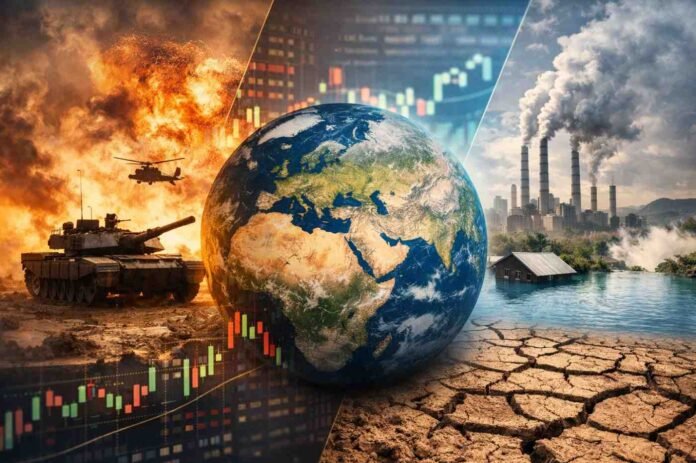
The world feels increasingly unstable. From wars and economic shocks to climate disasters and political upheaval, global crises are no longer isolated events—they are interconnected, compounding, and reshaping daily life across continents.
But what exactly is happening, and why do these crises seem to be accelerating all at once?
This article breaks down today’s most pressing global crises, explains their root causes, and shows how they affect governments, economies, and ordinary people worldwide.
What Are Global Crises?
Global crises are large-scale disruptions that cross national borders and affect multiple regions, systems, or populations at the same time. Unlike local emergencies, global crises tend to:
- Escalate rapidly
- Trigger chain reactions across economies and politics
- It requires international cooperation to resolve.
- Leave long-term consequences even after the immediate danger fades.
Today’s crises are especially complex because they overlap—economic instability worsens political conflict, climate disasters intensify migration, and technological change amplifies misinformation.
The Major Global Crises Shaping the World Today
1. Geopolitical Conflicts and Wars
Armed conflicts remain one of the most visible global crises. Ongoing wars and regional tensions have disrupted global trade routes, energy supplies, and diplomatic relationships.
Why it’s happening:
- Power struggles between major nations
- Historical territorial disputes
- Weak international enforcement mechanisms
- Competition over resources and influence
Global impact:
- Rising energy and food prices
- Refugee and humanitarian emergencies
- Spending more on the military at the expense of social services
2. Economic Instability and Cost-of-Living Crises
Many countries are facing economic pressure simultaneously. Inflation, debt, unemployment, and slowing growth have combined into a global cost-of-living crisis.
Key drivers include:
- Supply chain disruptions
- Energy price volatility
- High interest rates
- Aftershocks from pandemic-era policies
For everyday people, this translates into higher food costs, housing insecurity, and reduced purchasing power—fueling frustration and political unrest.
3. Climate Change and Environmental Emergencies
Climate change is no longer a future threat—it is a present-day global crisis.
What’s happening:
- More frequent heatwaves, floods, droughts, and wildfires
- Rising sea levels threaten coastal cities.
- Food and water insecurity in vulnerable regions
Why it matters globally:
Environmental crises intensify migration, strain governments, and increase competition over natural resources, making other crises harder to solve.
4. Global Health Challenges
While the pandemic phase has eased, global health remains fragile.
Ongoing issues include:
- Unequal access to healthcare and vaccines
- Overstretched medical systems
- Rising mental health crises
- Increased risk of future outbreaks
Health crises don’t stop at borders, making international coordination essential—but often politically difficult.
5. Political Polarization and Democratic Backsliding
Many nations are experiencing growing political division, weakened democratic institutions, and declining public trust.
Underlying causes:
- Economic inequality
- Disinformation and social media manipulation
- Loss of confidence in traditional leadership
- Cultural and ideological fragmentation
This instability reduces governments’ ability to respond effectively to other global crises.
Why Are So Many Global Crises Happening at Once?
The perception that “everything is going wrong at the same time” isn’t just psychological—it’s structural.
Interconnected Systems
Globalization has tightly linked economies, technology, and politics. When one system fails, others follow.
Faster Information (and Misinformation)
News spreads instantly, amplifying fear, panic, and polarization—even when facts are incomplete.
Long-Ignored Problems
Many current crises are the result of decades of postponed decisions on climate, inequality, and governance.
Reduced Global Cooperation
International institutions struggle to enforce cooperation in an increasingly fragmented world.
How Global Crises Affect Everyday Life
Even if a crisis seems distant, its effects often show up locally:
- Higher prices for food, fuel, and housing
- Job insecurity and slower wage growth
- Increased migration and social tension
- Reduced public services due to budget strain
Global crises are no longer abstract—they shape daily decisions for families, businesses, and communities.
What Happens Next?
The future depends on how governments, institutions, and societies respond.
Potential paths forward include:
- Stronger international cooperation
- Investment in climate resilience and clean energy
- Economic reforms focused on inequality.
- Improved crisis preparedness and early-warning systems
While global crises are unlikely to disappear entirely, better coordination and long-term planning can reduce their severity.
Frequently Asked Questions
Are global crises getting worse over time?
They are becoming more interconnected and visible, which makes them feel more intense and harder to manage.
Can individual countries solve global crises alone?
No. Most global crises require multinational cooperation, even though political realities often complicate that process.
Is there reason for optimism?
Yes. History shows that major crises can lead to innovation, reform, and stronger global systems—if lessons are learned.
Final Thoughts
Understanding global crises isn’t about fear—it’s about clarity. When we know what’s happening and why, we’re better equipped to make informed decisions, demand accountability, and prepare for what lies ahead.
The world is facing multiple challenges, but awareness, cooperation, and smart leadership remain powerful tools for navigating uncertain times.